
2 hr
Hout Bay Guided Kayaking Adventure
Paddle along Cape Town's iconic shoreline to spot playful Cape Fur Seals and discover local history.
Reserve

Hand-picked by our editors — the best 5 marine experiences from 47 reviewed.
Verified partners for every tour, free cancellation where available, and instant confirmation on every booking.
2 hr
Paddle along Cape Town's iconic shoreline to spot playful Cape Fur Seals and discover local history.
Reserve
10 hr
Journey to Africa's dramatic southwestern edge, meet wild penguins, and explore historic coastal towns
Reserve
10 hr
Journey to the dramatic Cape Point peninsula, meet adorable African penguins, and cruise along Chapman's Peak scenic route
ReservePrices from verified partners. Availability updates in real time at checkout. Free cancellation policies apply where shown.
The landmarks, rooms, and views travelers on this tour remember — all visible on a single visit.
The massive peak dominates the bay landscape and provides a dramatic backdrop for photography. It serves as a natural shelter for the harbor waters.
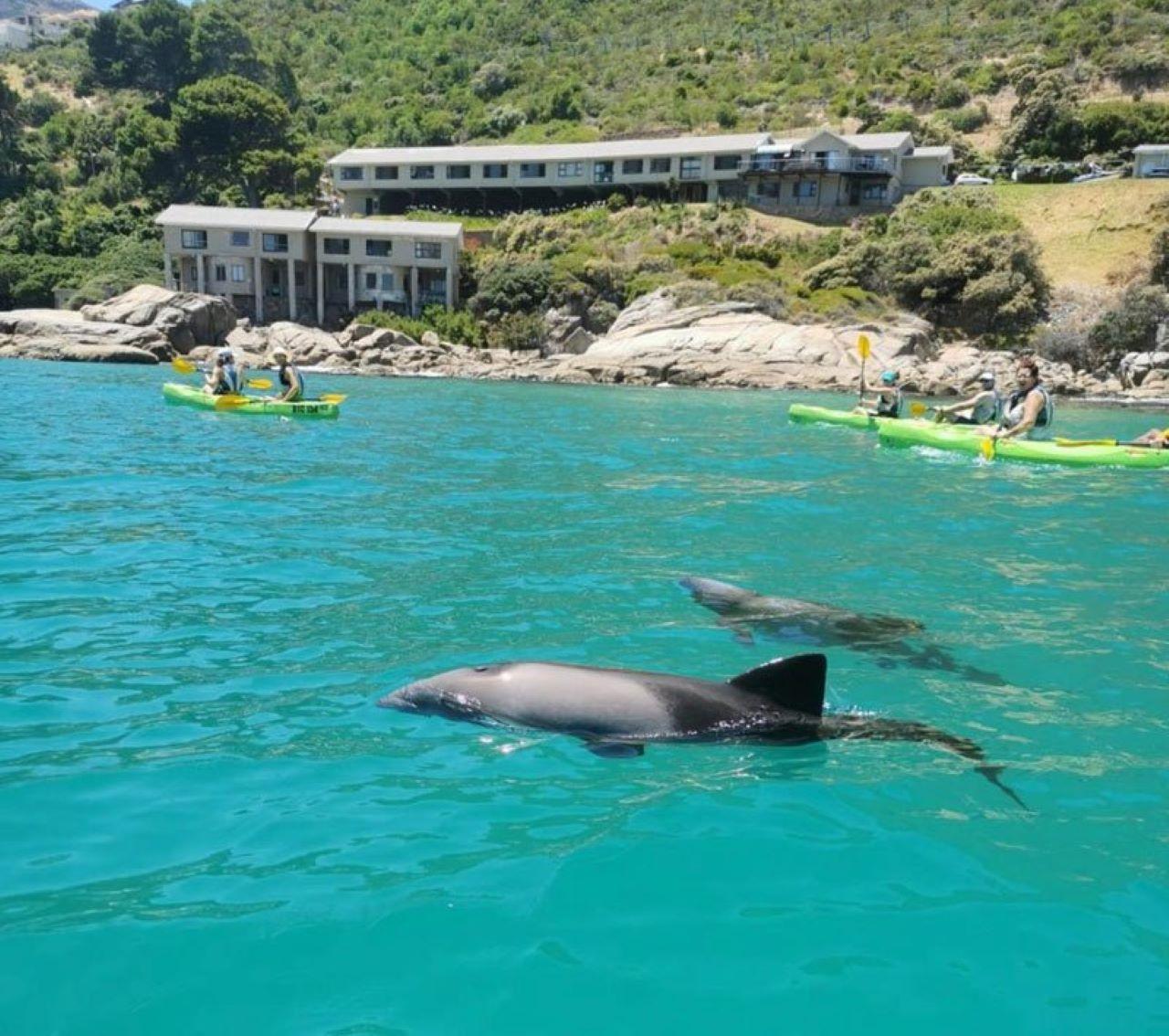
Selecting a hout bay kayak with dolphins tour offers a personal encounter with marine life, whereas boat tours provide a broader perspective of local landmarks. These activities complement each other; travelers seeking physical engagement prefer the kayak, while those wanting group stability favor the boat.
| Feature | Top pick Kayak Tour | Seal Island Boat |
|---|---|---|
Viewpoint |
Sea level perspective | Elevated deck view |
Wildlife Proximity |
High (direct encounter) | Low (observation only) |
Physical Effort |
High (requires paddling) | Low (passive seating) |
Duration |
2 hours | 1 hour |
Capacity |
Small group (up to 8) | Large group (20+) |
Cost |
750 ZAR per person | 650 ZAR per person |
| See tickets → |
Verdict: If you are purchasing hout bay kayak with dolphins tickets for an active morning, the kayak is superior, though the seal island boat tours remain a better option for group comfort.
Choose your ticket, select your date, and reserve in under two minutes. Secure checkout handled by our verified partner.
Instant confirmation by email, with a mobile voucher you can save offline. No printing, no queuing at a collection desk.
Arrive at the entrance, show your voucher on your phone, and walk in. Most tickets include priority or skip-the-line access.
Practical details for your visit straight from our verified partners — hours, access, rules, and how to get there.
Harbour Rd, Hout Bay, 7806
Check in at the designated kiosk
Follow the M63 or M6 towards Hout Bay. Ample parking is available near the harbour.
Use the MyCiTi bus service to reach the Hout Bay terminus. Short walk required to the harbour.
Wear comfortable, quick-drying clothing suitable for water-based outdoor activities. Bring a change of dry clothes as you are likely to get wet during your hout bay kayak with dolphins tour.
Secure storage for large bags is limited, so only bring essential items. Waterproof dry bags are recommended for any personal items brought on the hout bay kayak with dolphins trip.
Waterproof camera housings or floating straps are recommended for capturing images during your hout bay kayak with dolphins excursion. Keep devices secured to prevent loss in the harbor waters.
Participants should be comfortable on the water and able to climb into the boat from the dock. The hout bay kayak with dolphins adventure is not suitable for individuals with limited mobility or severe back issues.
Mobile phones should be kept in waterproof pouches at all times. The risk of water damage is high during a hout bay kayak with dolphins tour.
Children must be accompanied by an adult, and age restrictions often apply for safety. Please confirm minimum age requirements for these marine life viewing boat trips.
No food or drinks are provided during the session. There are several cafes nearby the harbour where you can dine after your hout bay kayak with dolphins experience.
Pets are not allowed on the watercraft for safety reasons. Please make other arrangements for your animals while participating in these boat tours.
Guides will provide safety briefings and equipment for all guests. Always follow instructions regarding marine wildlife interaction during your hout bay kayak with dolphins journey.
Best time to go, insider tips, nearby landmarks, and the cancellation fine print — flip through to skim what matters to you.
How crowds, weather, and events shift across the year.
December to February offer the warmest temperatures and clearest water. Calm mornings are ideal for seeing marine life.
March to May provide pleasant, mild weather with less wind. This is a popular season for local sea tours.
June to August brings cooler air, but marine sightings remain active. Early arrival is essential for calm sea conditions.
September to November features blooming flora and active wildlife. Early morning trips are recommended to avoid afternoon breezes.
Small details that turn a good visit into a great one.
Winds in the afternoon can make paddling difficult. Always aim for the early 08:00–12:00 arrival window for the calmest sea.
The reflection of the sun off the water intensifies UV exposure. Wear high-factor sunscreen and a hat to remain protected.
Keep a respectful distance from dolphins and seals to avoid disturbing them. Allow the animals to approach the boat on their own terms.
Tours can fill up quickly during peak seasons. Secure your hout bay kayak with dolphins tickets online to ensure availability.
Safety is the top priority in marine environments. Following the instructions of your guide ensures a safe and enjoyable excursion.
Non-bookable sights within a short walk — free to visit, easy to pair.
Home to a colony of Cape Fur Seals often seen from the water. Tours depart frequently from the harbour area.
Flexible, no hidden fees.
Full refunds are typically provided if notice is given within the operator's specified cancellation window. There is 0 ZAR entrance fee, so costs only apply to the booked guided session.
Hand-picked options within walking distance — pick a district for vibe, or a specific hotel for convenience.
Upscale accommodation with ocean views and modern amenities. Conveniently located near the harbour entrance.
The Atlantic swells that roll into Hout Bay harbour carry nutrients from the Benguela Current, creating one of the southern hemisphere's richest marine ecosystems within sight of Chapman's Peak. Duiker Island, a granite outcrop 500 metres offshore, hosts a permanent colony of more than 5,000 Cape fur seals, and the channel between the island and the mainland draws Indo-Pacific bottlenose dolphins year-round, particularly during the early morning hours when sardine shoals concentrate near the surface. The bay's natural amphitheatre — carved by the same tectonic forces that lifted Table Mountain 260 million years ago — shelters paddlers from the prevailing south-easterly winds that batter the wider Cape Peninsula, while the cold upwelling zone keeps water temperatures between 12°C and 16°C even in summer, sustaining the pelagic fish that anchor the food web. Commercial sea kayaking operations established themselves in Hout Bay during the late 1990s, after the harbour's fishing fleet contracted and tourism infrastructure expanded along Harbour Road. The bay's working waterfront remains active — trawlers still unload hake and snoek at the main jetty — but the morning launch window between eight and noon now accommodates both industrial vessels and recreational kayakers, with guides briefing groups on beach etiquette and marine approach distances before paddlers enter the surf zone. The proximity of Duiker Island makes Hout Bay one of the few Atlantic seaboard sites where novice kayakers can encounter wild marine mammals within a 30-minute paddle, and the bay's relative protection from ocean swell allows year-round operation, unlike exposed beaches further south toward Kommetjie or Scarborough. The marine wildlife kayaking experience in Hout Bay unfolds in three ecological zones. Paddlers depart from the harbour's eastern breakwater, crossing the shallow bay floor where kelp forests anchor to bedrock at depths of four to eight metres. The channel between the mainland and Duiker Island descends to 15 metres, and the tidal flow through this gap concentrates baitfish during the rising tide, drawing seals and dolphins that hunt cooperatively. Guides maintain a 50-metre distance from seal haul-out zones to comply with provincial marine wildlife regulations, but seals often approach kayaks independently, investigating paddle blades and circling beneath hulls. Dolphin sightings depend on seasonal fish movement — encounters peak between May and September when sardine migration sweeps the Cape coast — but resident pods patrol the bay throughout the year, and calves born in sheltered waters between November and February often display heightened curiosity toward watercraft. The return paddle crosses the bay's western edge, where the seafloor drops away toward the continental shelf and the view opens across the Sentinel peak toward the Twelve Apostles massif.
"The channel between the mainland and Duiker Island descends to 15 metres, and the tidal flow through this gap concentrates baitfish during the rising tide, drawing seals and dolphins that hunt cooperatively."
A step-by-step walkthrough of the visit — what you'll see, how long each stage takes, and the details that matter.
You meet your guide at the Harbour Road kayak station at eight in the morning, when the wind is still slack and the bay's surface holds a faint mist. After a 15-minute safety briefing covering paddle technique and marine approach protocol, you pull on a wetsuit — the water temperature hovers near 14°C in August — and carry a double kayak across the beach to the launch zone beside the eastern breakwater. The first paddle strokes cut through shallow water above kelp beds, and within five minutes you've cleared the harbour and turned southwest toward Duiker Island, a low granite ridge 500 metres offshore. The crossing takes 20 minutes. Midway, you pause to watch a seal surface ten metres away, its whiskers twitching as it tracks your movement. Your guide signals the group to hold position, and within seconds three more seals circle beneath the kayaks, their streamlined forms visible through the green water. You resume paddling toward the island's northern shore, where the seal colony sprawls across wave-cut platforms — the sound reaches you first, a low chorus of barks and grunts, before the smell of guano drifts downwind. You hold offshore while seals dive and surface around the group. If dolphins are present, they announce themselves with a sudden exhalation — the pod often appears without warning, surfacing in tight formation as they drive a baitball toward the rocks. You watch for ten minutes, then turn back across the bay, the Sentinel rising behind you, the paddle home taking another 25 minutes as the wind begins to build.
The attraction is open daily from 08:00–14:00. We recommend arriving between 08:00–12:00 for the best conditions.
Yes, marine life such as Cape Fur Seals and occasionally dolphins are observed in the area. The guides facilitate respectful encounters during the tour.
Booking hout bay kayak with dolphins tickets online in advance is highly recommended to guarantee your spot. High demand can lead to sold-out sessions.
You can reach the Hout Bay Harbour by car or MyCiTi bus. The address is Harbour Rd, Hout Bay, Cape Town, 7806.
Wear light, quick-drying clothing and water-appropriate footwear. You will likely get wet during the hout bay kayak with dolphins activity.
Yes, please check specific age requirements with the operator during booking. Safety of all participants is the primary concern.
Tours may be rescheduled or canceled due to high winds or rough seas. Safety is the standard for all hout bay kayak with dolphins operations.
Yes, but use waterproof housings or straps. The hout bay kayak with dolphins tour involves water, creating a risk for electronic devices.
There is 0 ZAR entrance fee. Costs only apply to the guided tour per person.